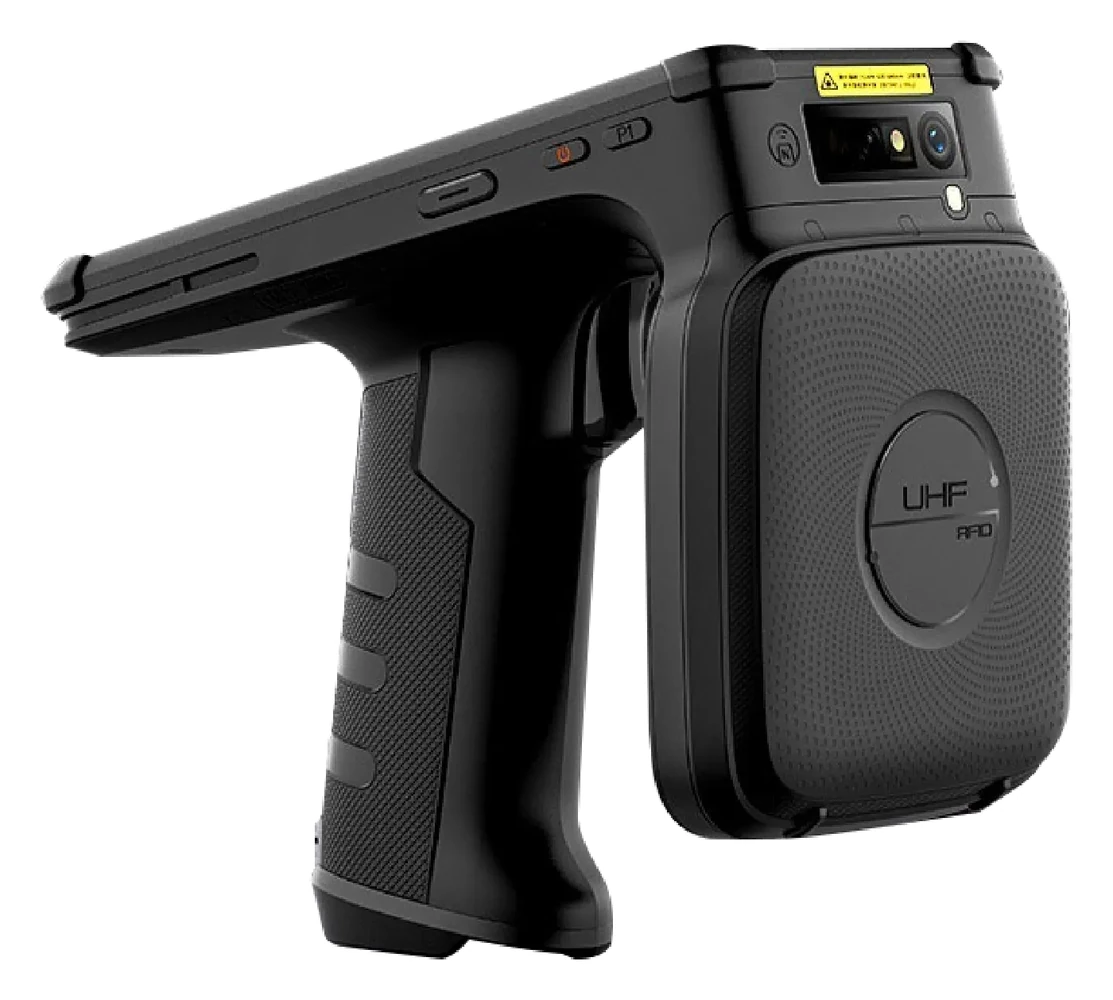
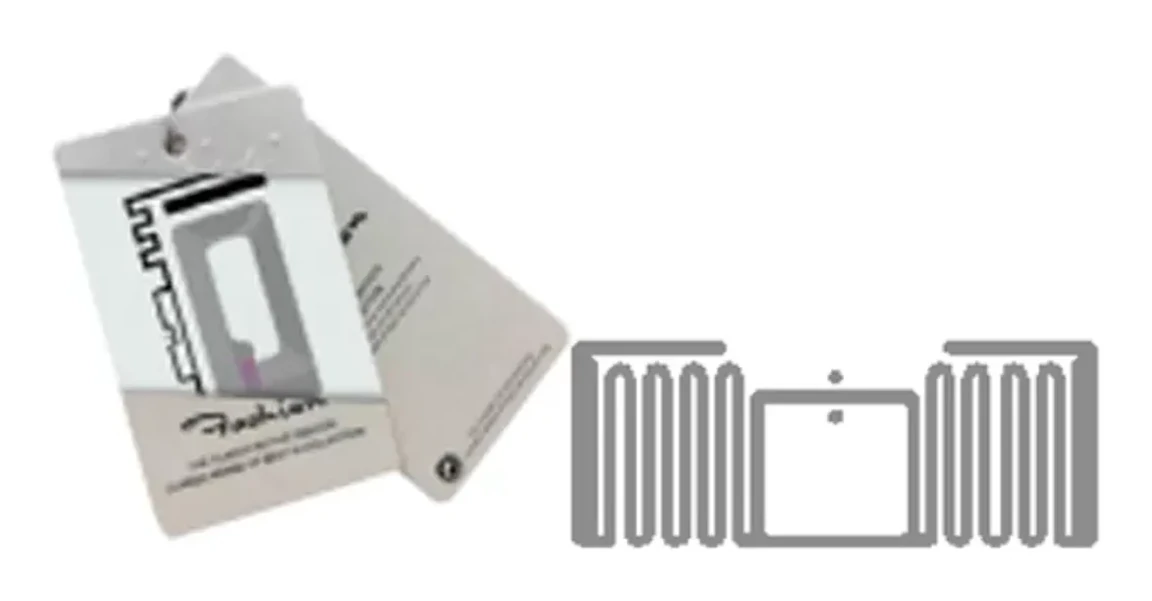
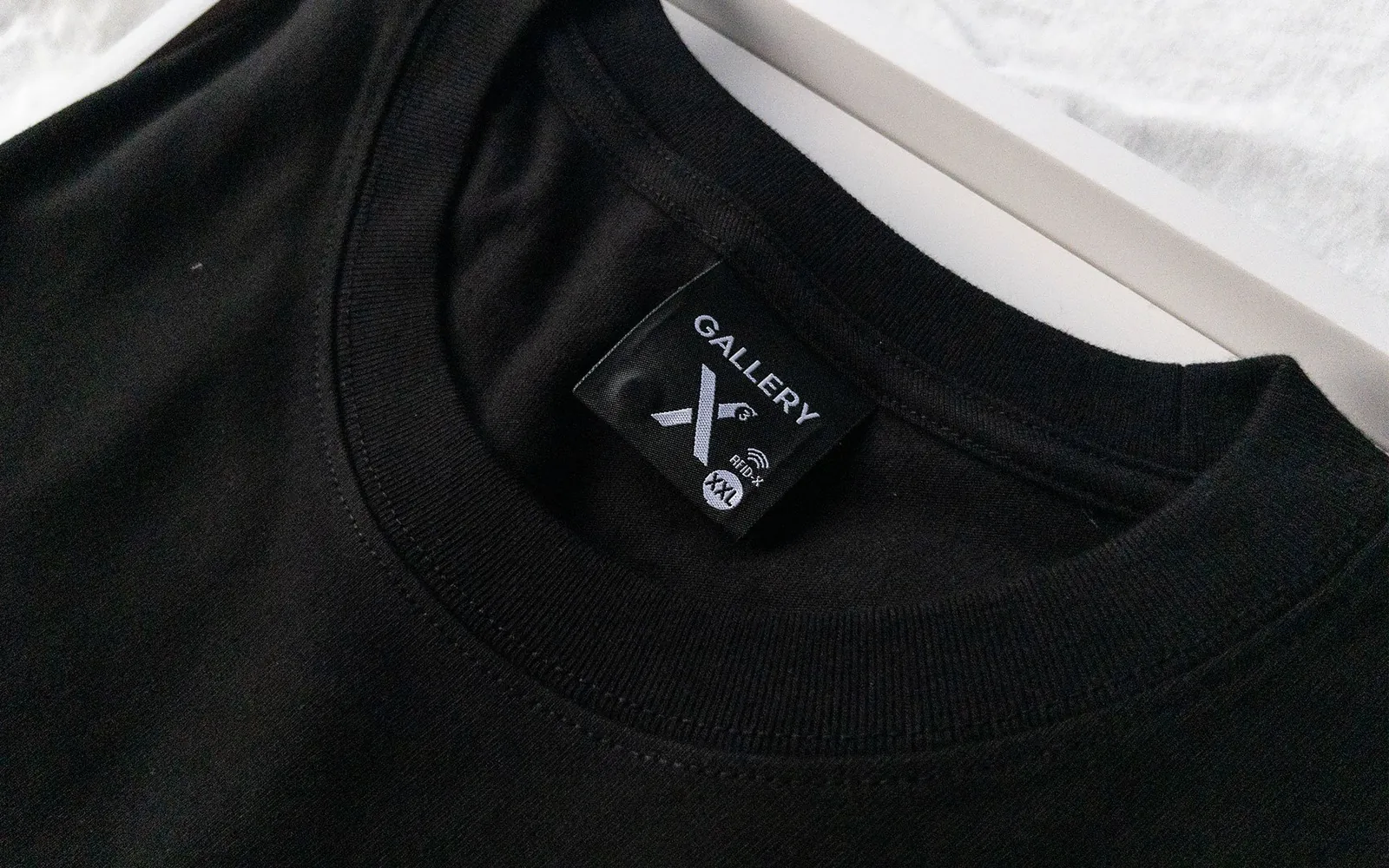
A barcode count means taking out each item and scanning its barcode. An RFID count means walking along the rails and tables with a handheld reader, reading all the labels nearby at once. Labels don't have to be visible to be read, so folded stacks stay folded. That said, every item needs a label, and the count zones and read area have to be set up for your store.
What changes
Labels read even when they're out of sight
A scanner has to see a barcode to read it, but an RFID label can be read even when the reader can't see it.[1] Folded stacks get counted without lifting each piece.
Count by zone, not by piece
As you walk past with the reader, every label within the read area is read together. The more labels there are, the longer it takes to read them all,[1] so divide the floor into zones, such as one rail or one table, and walk past slowly.
| Feature | Barcode count | RFID count |
|---|---|---|
| How you read | Scan each barcode in turn | Read together as you walk past with a reader |
| Line of sight | Barcode must be visible | Reads even when hidden |
| Folded stacks | Lift and scan each piece | Read in place |
| Result | Quantity scanned | List of label numbers read, matched straight to your stock records |
| What you need | Existing barcodes | A UHF label on every item, a handheld reader |
What a count looks like
In a barcode count, you lift garments to find the barcode
A typical count goes like this: one person lifts each garment to find its barcode, and another scans it. If they lose track of which section they've counted up to, they count that section again.
In an RFID count, you walk between the rails with a reader
One staff member walks slowly between the rails with a handheld reader. The count on the screen goes up, and once they've covered the area, they compare it with the stock records to see which items are short. To find a particular item, some readers have a feature that beeps faster as you get closer to it.
Making the switch
- Start with labelsUse sewn-in labels for new production and start existing stock with hang tags. How to choose →
- Set up zonesName each row of rails, table and stockroom shelf to define your count zones.
- Run the first count both waysCount the same zone with barcodes and with RFID, find where the numbers differ and work out why.
- Connect to your recordsLink to your sales and receiving records so count results go straight into your stock figures.
- Count more oftenEach count takes less work, so you can count at shorter intervals.
The difference in numbers
Brands that verified shipments with RFID reached order accuracy above 99.9%
The numbers come from Project Zipper, a study in which the Auburn University RFID Lab in the US and GS1 US examined transactions between several brands and retailers for one year starting in 2017. Without RFID, 69% of orders between brands and retailers had data errors, while brands that verified their shipments with RFID reached order accuracy above 99.9%.[2][3][4]
These figures measure dispatch and receiving data for goods moving from brands to retailers. They do not measure the accuracy of in-store stock counts.
Sources
- Wikipedia, “Radio-frequency identification”, en.wikipedia.org
- SupplyChainBrain, “How to Achieve Perfect Order Accuracy With RFID” (February 6, 2019), supplychainbrain.com
- Refrigerated & Frozen Foods, “Line-item RFID to increase supply chain efficiency”, refrigeratedfrozenfood.com
- RFID Journal, “Project Zipper Finds Order Accuracy Jumps to Nearly 100 Percent With RFID”, rfidjournal.com
Links checked in November 2026.