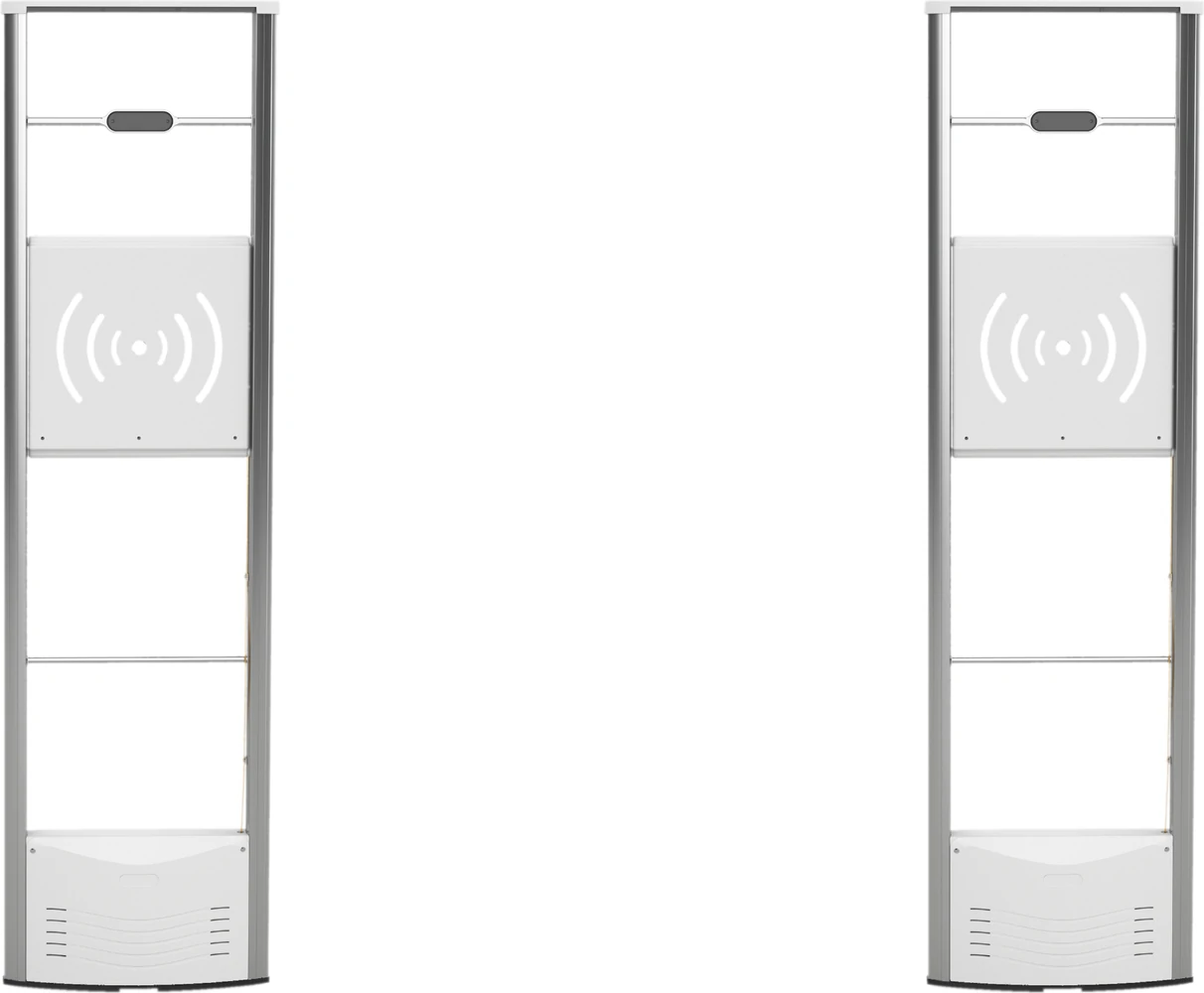
Store anti-theft gates use one of three technologies: AM, RF or RFID. AM and RF gates only know that a tag went through; RFID gates also know which item left. If you'll count stock with RFID, look first at RFID, which uses your stock labels for anti-theft too. If you carry a lot of metal or foil packaging, compare AM first. Whichever you choose, use one technology per store.
Three technologies
AM uses tags that resonate at about 58kHz
The gate sends short pulses at around 58kHz. A thin metal strip inside the tag answers by vibrating at the same frequency, and the gate picks up this vibration and sounds the alarm. At checkout, the tag's magnetization is changed so it won't set off the gate again.[1]
RF uses thin circuit labels tuned to 8.2MHz
Inside the label is a small circuit made of a coil and a capacitor, which in stores is usually tuned to 8.2MHz. The gate sweeps through frequencies and alarms when the circuit responds. At checkout, a deactivation pad breaks the circuit, though very small labels may not deactivate consistently.[1]
RFID checks each label's number to see whether it was paid for
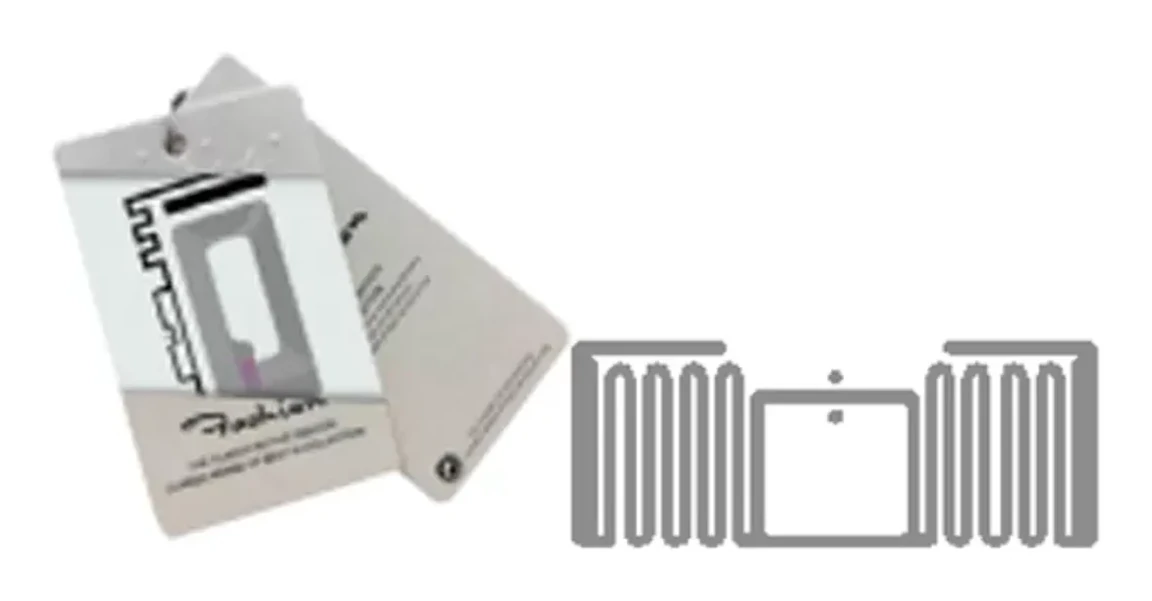
Each item carries a UHF label with its own unique number. At checkout, that number is recorded as sold, and the reader at the entrance alarms only when it reads a number that hasn't been sold.[2] Because the gate has to decide within a few milliseconds, some systems also write a sold status to the label at checkout.[3]
Hard tags come off with a detacher, whatever the technology
Rigid tags pinned to garments are removed at checkout with a detacher and reused. The detacher has to match the tag type.[1]
How the technologies differ
| Feature | AM | RF | RFID |
|---|---|---|---|
| Signal | About 58kHz | Usually 8.2MHz | UHF (band varies by country) |
| Tags | Hard tags, labels | Labels, hard tags | UHF hang tags, stickers, sewn-in labels |
| At checkout | Deactivated magnetically | Pad breaks the circuit | Number recorded as sold |
| What the gate knows | Whether a tag passed | Whether a tag passed | Which item left |
| Stock counting | Not possible | Not possible | With the same labels |
With all three technologies, hard tags are removed with a detacher and reused.
How to choose
If you'll count stock with RFID, start with RFID
The label you count stock with doubles as the anti-theft tag, so you don't tag each item twice. The system also records which item set off the alarm.[2]
With a lot of metal or foil packaging, compare AM first
RF labels are easily shielded by metal; even a single coin placed on one can block it. Some manufacturers say AM is less affected by foil. Wrap an item in enough foil, though, and any technology can be blocked.[1]
Use one technology per store
Stores usually run a single technology. If a shopper walks in carrying an item with an active tag of another type, it can set off alarms in unexpected places.[1] When you switch technologies, change the gates, the tags and the deactivation equipment at checkout together.
If goods arrive tagged from the factory, match that technology
When the brand or factory applies tags before dispatch, it's called source tagging. In the US, manufacturers often apply both AM and RF tags.[1] A UHF label sewn in during production, like RFID-X, serves both RFID gates and stock counts from the day the goods reach the store.
Gate placement
With RFID, watch for displays inside the read area
If the entrance reader also reads labels on items displayed near the door, it can alarm for goods that never left.[2] So we measure the gate position and read area in your store and plan the displays right next to the entrance at the same time.
Wide entrances need more pedestals
A gate reads tags passing between its pedestals, so for a wide entrance, extra pedestals split it into zones. The number of pedestals and their spacing depend on the entrance width and the product you choose.
Before we talk
- The width and number of entrances, and the displays beside them
- How much of your product range is apparel, accessories and goods in metal or foil packaging
- The technology and type of your current tags, and whether you'll keep or replace them
- Whether you plan to count stock with RFID
- How many checkouts you have and how you deactivate and remove tags today
Sources
- Wikipedia, “Electronic article surveillance”, en.wikipedia.org
- RFID Journal, “GS1 Releases Guidelines for RFID-based Electronic Article Surveillance”, rfidjournal.com
- Impinj, “Loss Prevention Using Monza R6-P” application note (PDF), support.impinj.com
Links checked in November 2026.