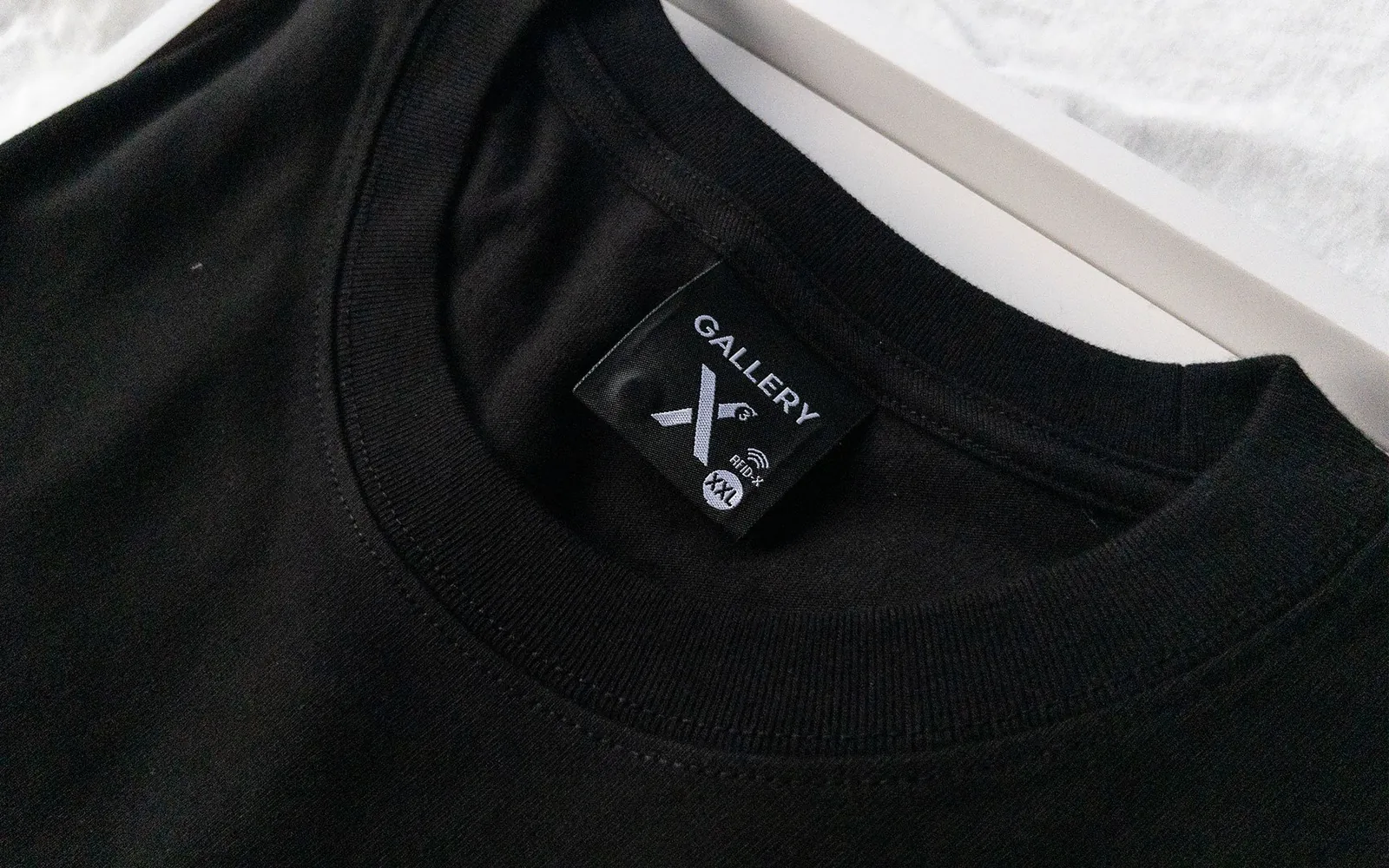
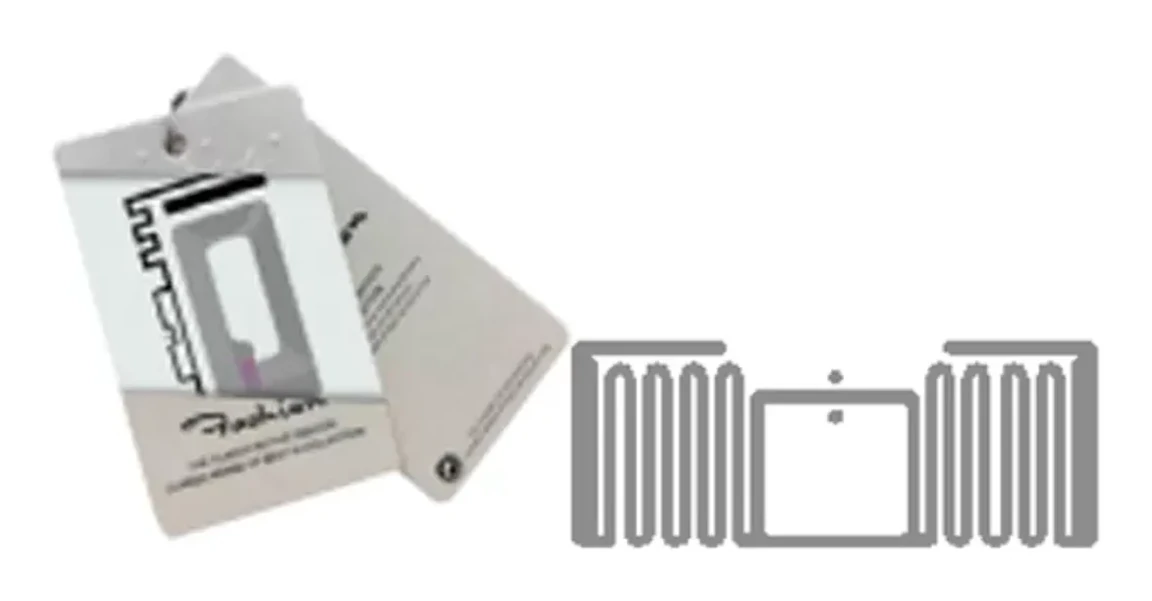
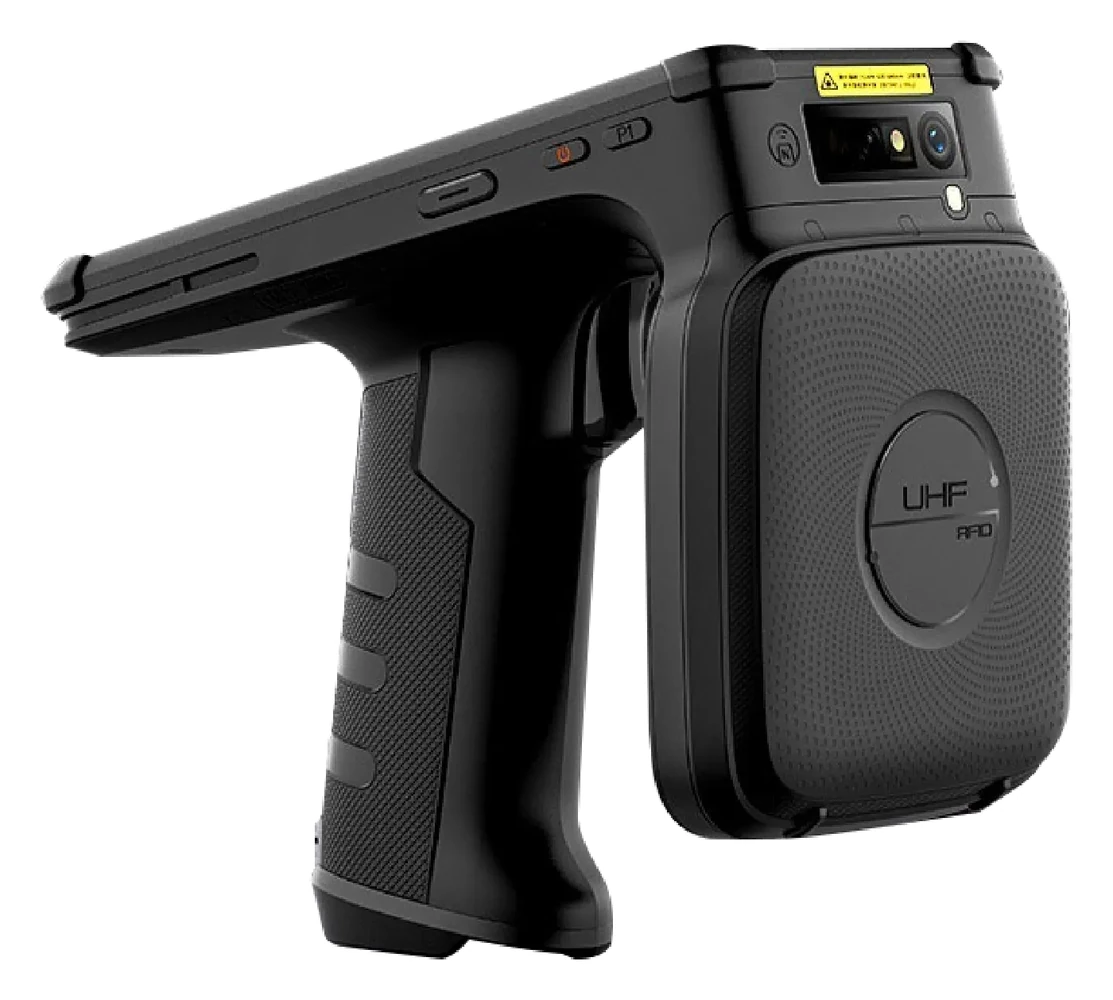
Use sewn-in labels for new production when you need to identify the garment even after it's sold. To tag finished garments, accessories or packaged goods quickly and start counting stock, begin with hang tags or sticker labels. Both are UHF and read with the same readers, so you can use both in one store.
How the labels differ
| Feature | Sewn-in labels | Hang tags | Sticker labels |
|---|---|---|---|
| When it's attached | During production | At dispatch or receiving | At packing or receiving |
| How it's attached | Sewn in as a neck or care label | Hung from the garment on a string | Stuck on boxes or packaging |
| After payment | Stays on the garment | Removed before it's worn | Thrown away with the packaging |
| Washing | Waterproof, heat-resistant design that goes through the wash with the garment | Removed first, so never washed | Never washed |
| Shopper's phone | Read over NFC (RFID-X) | Depends on the label | Depends on the label |
| Stores and logistics | All three are UHF, so the same handheld readers and gates read them | ||
How to choose
For new production, sewn-in labels take less work
The label is sewn in with the garment on the sewing line, so no one has to tag each piece again after receiving. You count with the same number from factory dispatch through store receiving to the sales floor.
For finished garments and accessories, start with hang tags or stickers
There's no need to make new garments. Print your current hang tag design with RFID built in, or put stickers on boxes and packaging, and start counting right away.
If you need to identify items after the sale, choose sewn-in
Hang tags come off before the shopper wears the garment, so after that no number is left to identify it. A sewn-in label stays on the garment, and the same number is used when a shopper checks authenticity with a phone or when a store checks a returned item.
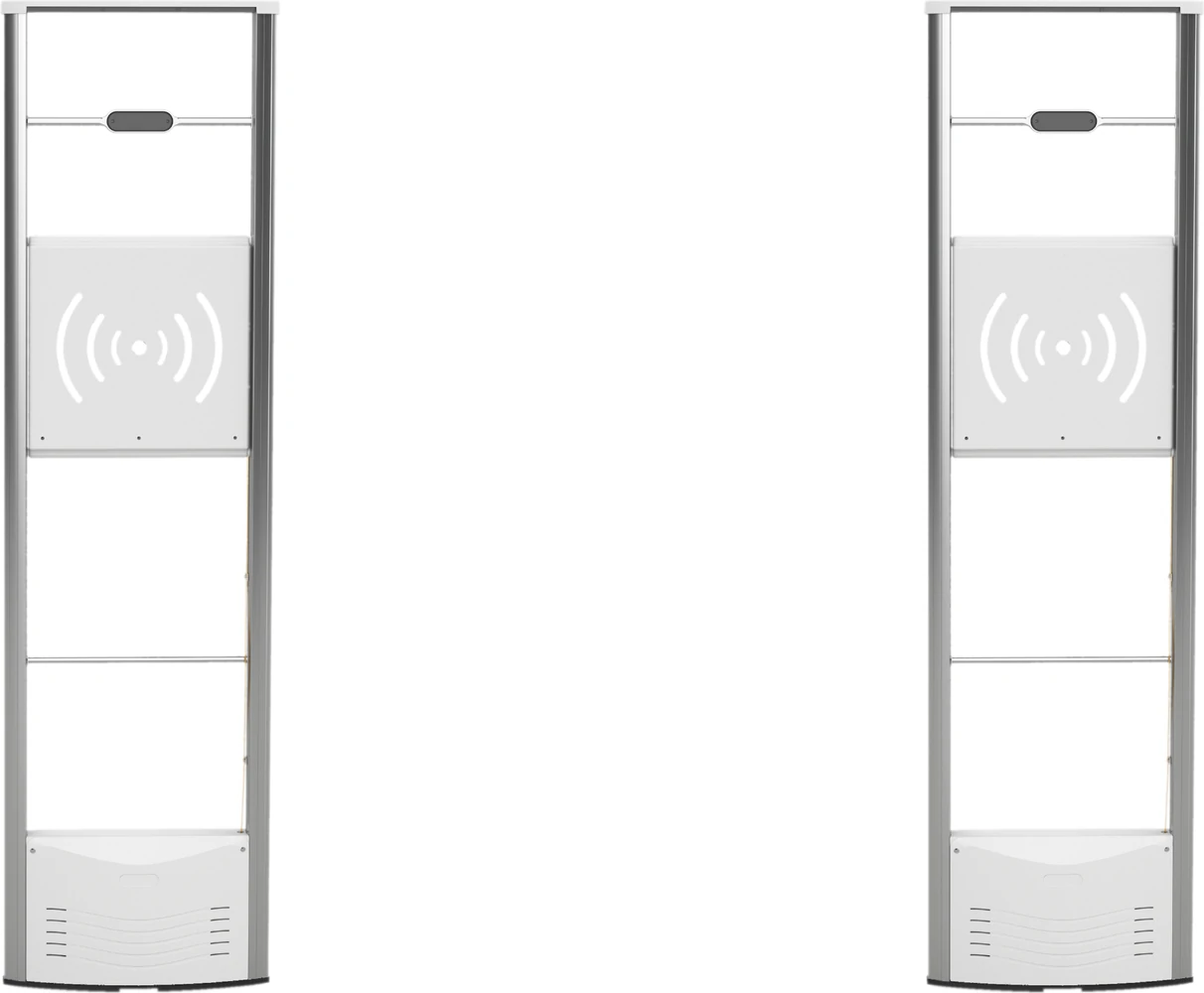
For anti-theft too, check your gate technology first
With RFID gates, both labels double as anti-theft tags. Stores with AM or RF gates attach separate anti-theft tags. For the differences between technologies, see our guide “AM, RF or RFID: which anti-theft system fits your store?”
By situation
| Situation | Label to use | Why |
|---|---|---|
| A brand having its new season made at a factory | Sewn-in labels | Add the label to the sewing schedule and there's no separate tagging |
| A store that wants to count last season's stock first | Hang tags | Hangs straight onto garments already on the rails |
| Accessories such as hats, bags and socks | Sticker labels, hang tags | Stuck on or hung to suit the product and its packaging |
| A brand that wants to offer shoppers an authenticity check | Sewn-in labels | A tap of a phone reads it over NFC |
| Organizations that track garments through many washes over time | Sewn-in labels | Test under your wash conditions first (see the laundering guide) |
Using both
Read with the same readers, but use one numbering scheme
Sewn-in labels and hang tags are both UHF, so the same handheld readers and gates read them. But the numbers on both labels must follow the same scheme for your inventory software to count them as one product.
Match readers to the country your stores are in
UHF bands and regulations differ from country to country.[1] If you have stores in other countries, choose readers set up for each country and check that your labels read in that band too.
Sources
- Wikipedia, “Radio-frequency identification”, Regulation and standardization section, en.wikipedia.org
RFID-X specifications are provided by KOREANFRIENDS.
Links checked in November 2026.